Pool lighting isn't just an aesthetic choice — night-time safety, energy efficiency and fixture service life all depend directly on picking the right LED type. Choosing between PAR56 SMD, 3/6/9 Power LED, Single LED, April and Kitty series comes down to three criteria: light output, mounting type and waterproof rating.
What's the difference between PAR56 SMD and Power LED?
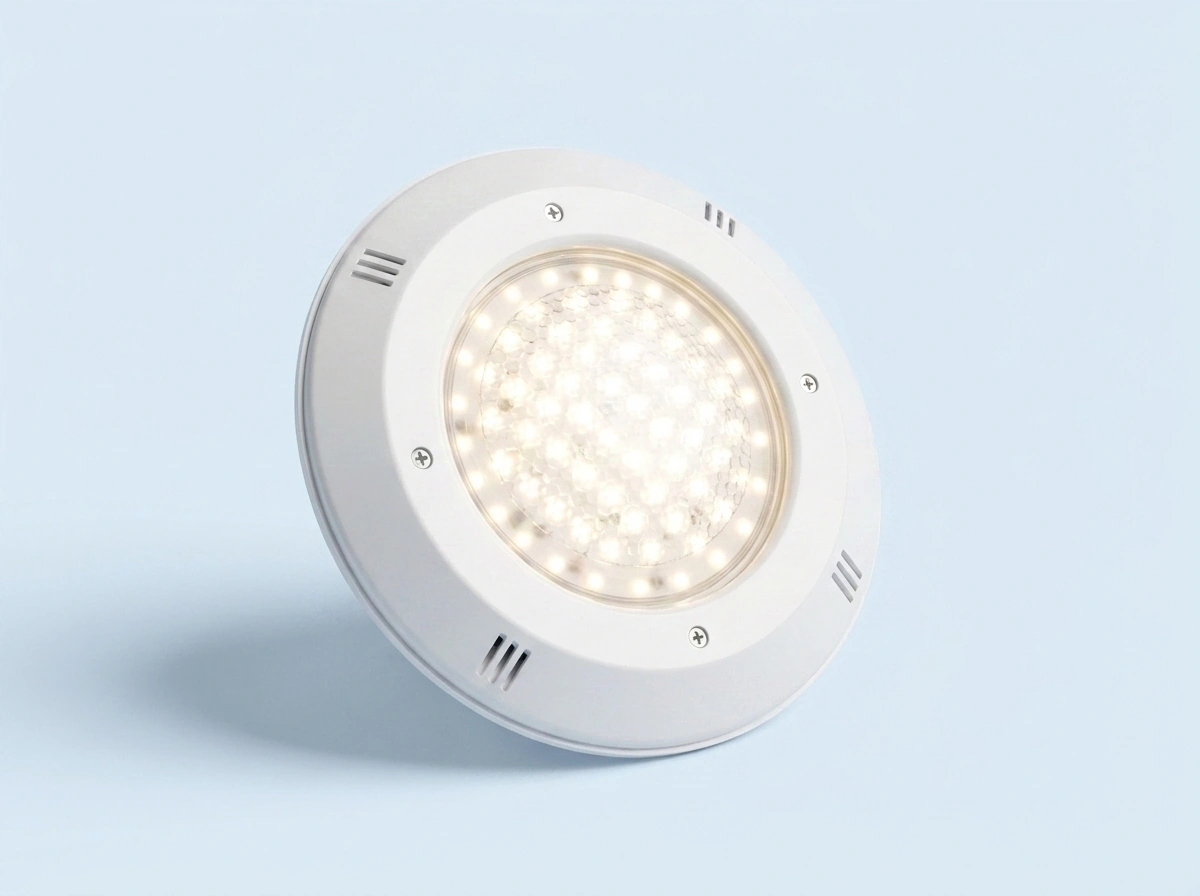
PAR56 is the most widely used fixture housing standard in the pool industry; at 56/8 inch (roughly 178 mm) diameter, it fits almost every pool niche worldwide. PAR56 SMD fixtures pack the housing with many small SMD LED chips to produce a wide, even wash of light — an economical, low-maintenance choice for standard residential and hotel pools.
Power LED fixtures, built around one or a few high-output 3, 6 or 9-watt LED modules, deliver higher lumen density and throw light further. They're the better choice for Olympic pools deeper than 1.5 metres, show pools, or architectural projects that want a defined spotlight effect. In short: SMD for wide, soft lighting; Power LED for strong, focused lighting.
Why is an IP68 rating non-negotiable?
Pool fixtures run permanently underwater and carry mains or low voltage — so the protection rating isn't a nice-to-have, it's a safety requirement. IP68 means the fixture is fully sealed against dust and won't let in water under continuous immersion, for the pressure and duration the manufacturer specifies. Lower ratings like IP54 or IP65 are fine for garden lighting but not for underwater use.
Every fixture SNY Pool manufactures is IP68-rated and available in AISI 304/316 stainless steel or ABS housings. For salt-chlorinated systems, an AISI 316 housing is the safer long-term choice; AISI 304 is sufficient for standard chlorinated systems.
How do you size the right light output?
A commonly used rule of thumb is one PAR56 fixture (roughly 18-35W LED equivalent) per 8-10 m³ of water volume. For deeper pools or those with dark-coloured surfaces (navy, anthracite), increase fixture count by 20-30%, since dark surfaces absorb light rather than reflecting it.
Colour temperature matters too: warm white (2700-3000K) reads as bright and inviting, while RGB / multi-colour systems, paired with a control panel, create dynamic scenes for event and concept pools.
Maintenance habits that extend fixture life
Even with a 50,000-hour LED lifespan, checking gaskets and O-ring seals once a year keeps moisture out of the cable entry. Make sure the fixture in its niche always stays below the water level, and never run it dry — that's the single most common cause of failure, as the LED chips overheat and their lifespan shortens dramatically.
Browse LED Lighting Fixtures
PAR56 SMD, 3/6/9 Power LED, Single LED, April and Kitty series — in ABS and AISI 304/316 stainless options. IP68 certified, 50,000-hour lifespan.