Keeping swimming pool water crystal-clear and sanitized relies not just on filter performance, but on how evenly treated water circulates into every cubic meter of the pool basin. Poorly sized or positioned return inlets create stagnant dead zones where chlorine cannot penetrate, sparking localized algae blooms and cloudy water.
Floor return inlets vs. wall return inlets: Circulation dynamics comparison
Two primary hydraulic circulation designs dominate pool engineering: wall returns and floor returns. Wall inlets are typically specified in skimmer pools, positioned directly opposite the skimmers to push floating debris across the waterline into the skimmer baskets.
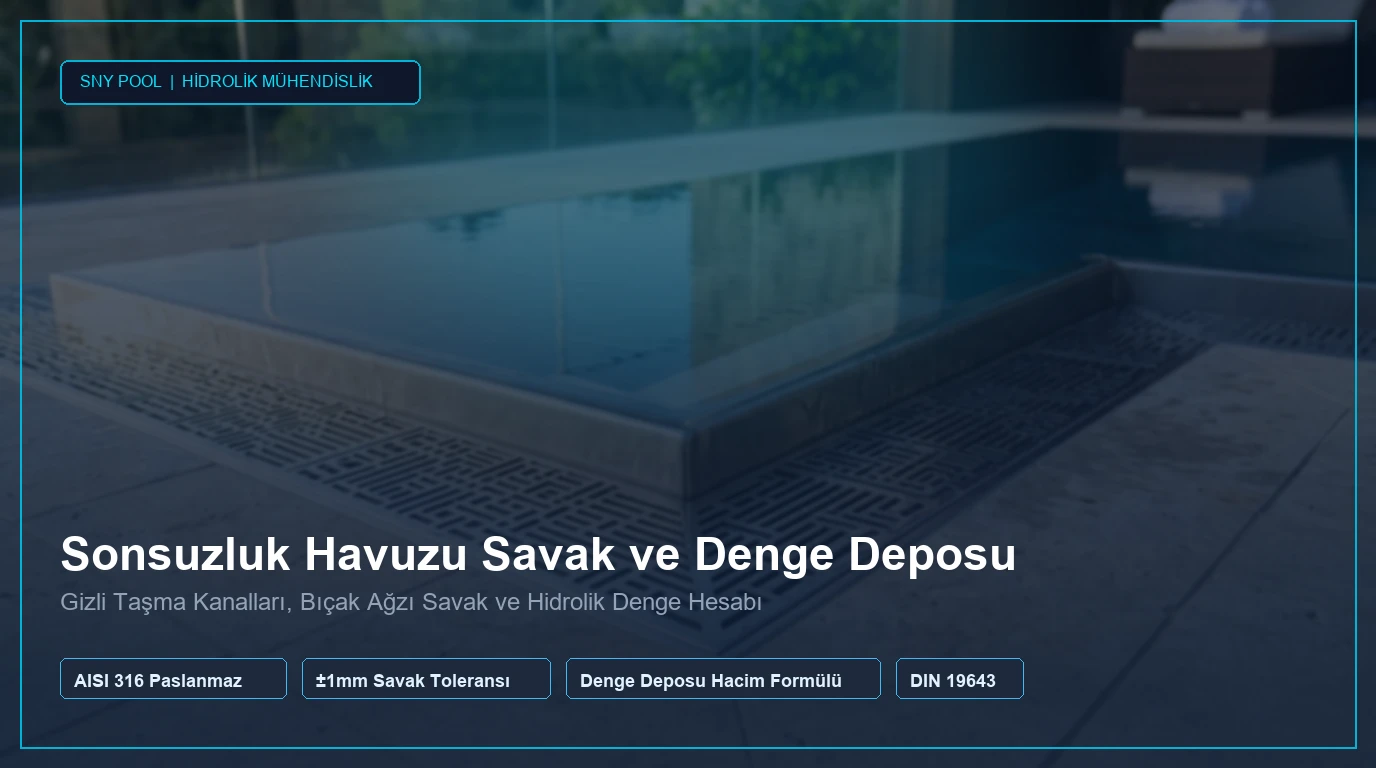
In overflow deck-level pools, luxury hotel facilities, and Olympic basins, DIN 19643 standards mandate floor return inlets. Pressurized water introduced from the pool floor generates a vertical displacement flow curtain from the floor to the perimeter overflow gutter. This eliminates thermal stratification, distributes chlorine evenly, and drives settling debris upward toward the gutters.
Calculating nozzle flow rate (m³/h), velocity limits (0.5 – 1.5 m/s), and spacing
Under TS EN 13451-3 safety regulations, inlet exit velocity must be engineered between 0.5 m/s and 1.5 m/s. Velocities exceeding 1.5 m/s create aggressive jet streams uncomfortable for bathers, whereas velocities below 0.5 m/s lack the hydrodynamic throw distance required for deep basin mixing.
Worked engineering example: For a 12 x 6 m pool at 1.5 m depth (108 m³ volume) operating on a 4-hour turnover cycle, the required filtration flow rate is 27 m³/h. Sizing standard Ø50 mm inlet nozzles at 4.5 – 5.5 m³/h each dictates a minimum array of 5 to 6 nozzles distributed evenly across the floor or sidewalls.
Vacuum fitting selection, manual suction cleaner connection, and entrapment safety
Dedicated vacuum fittings provide an isolated suction connection point for manual pool vacuum hoses and wheeled brush assemblies. They are installed 15 to 25 cm below the operational waterline and piped to a dedicated suction valve in the plant room.
Entrapment safety requires spring-loaded, self-closing safety faceplates on all vacuum ports. The moment a cleaning hose is disconnected, the spring mechanism snaps shut, preventing bather limb or hair entrapment. SNY Pool's AISI 316 stainless steel vacuum fittings feature high-tensile springs and corrosion-immune threads that resist chloramines and ozone degradation.
Field checklist for nozzle placement and dead zone calibration
Commissioning checklist for engineers and operators: 1) Aim directional eyeball nozzles 15° downward and slightly tangential toward the furthest corner to establish a continuous vortex circulation; 2) Position dedicated auxiliary nozzles behind access stairs, built-in benches, and shallow ledges where stagnant zones typically form; 3) Always specify AISI 316 stainless steel bodies and mounting screws for saltwater chlorinator systems in coastal regions.
Browse Inlet & Vacuum Nozzles
Floor and wall inlet nozzles and vacuum nozzles for pool water circulation. Available in ABS and AISI 304/316.