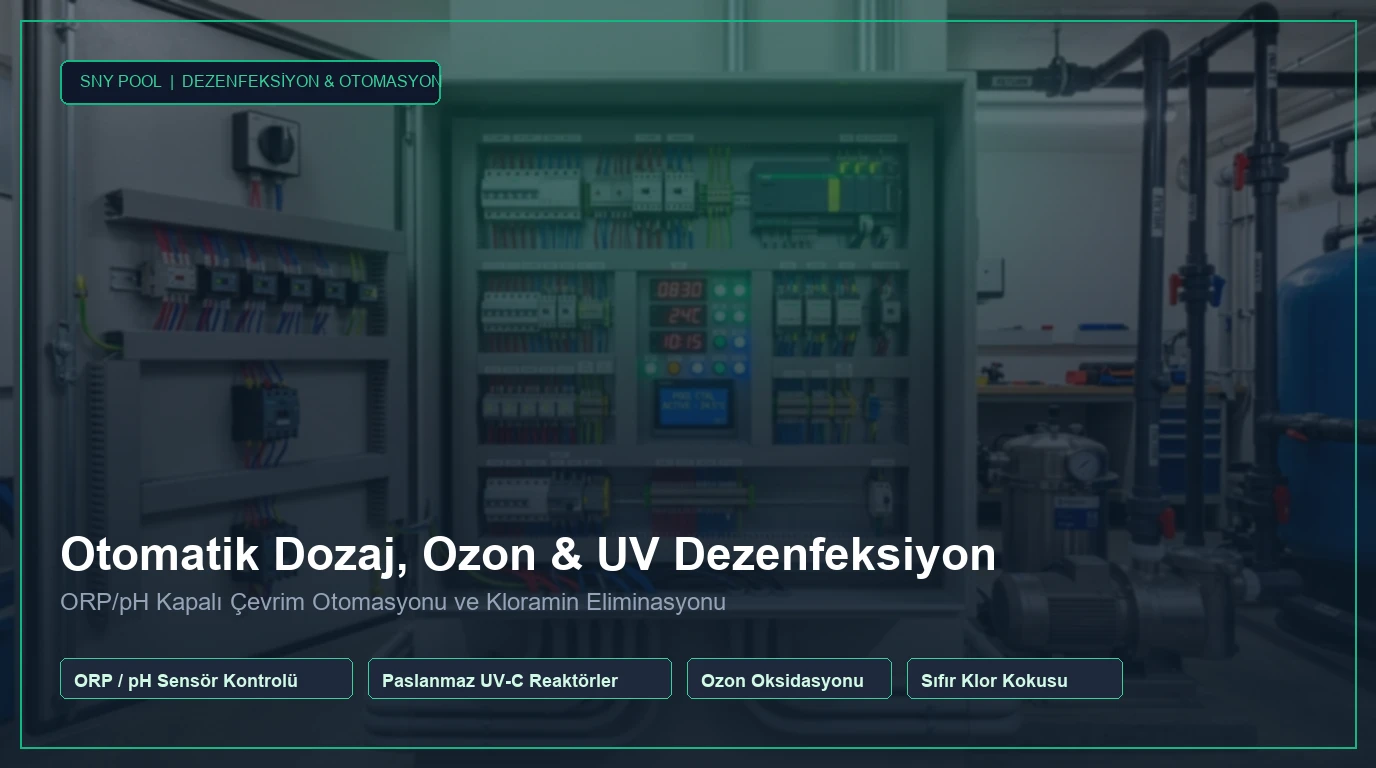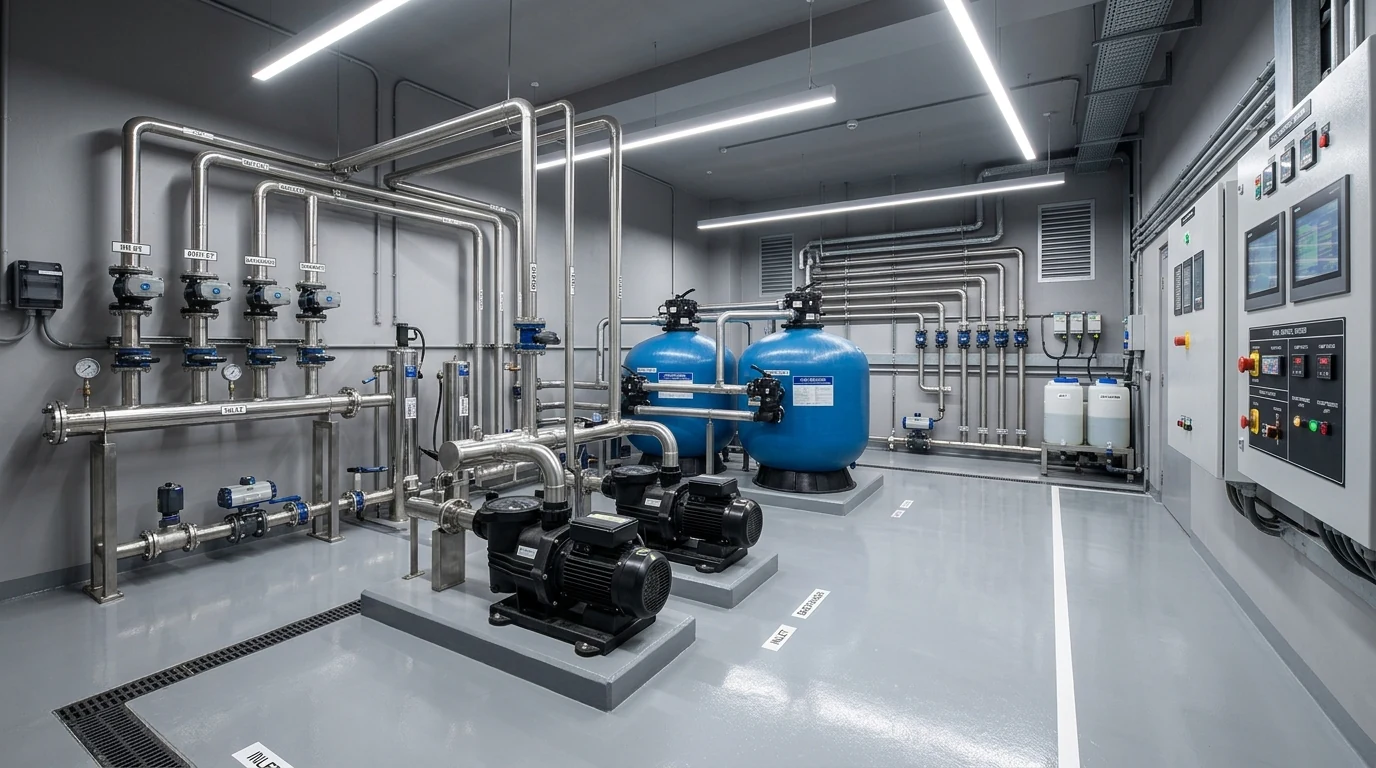
The plant room is the beating heart of any swimming pool. Housing pumps, sand filters, chlorinators, dosing automation, and manifolds, this technical hub must be engineered meticulously. Substandard access, inadequate ventilation, and moisture build-up can ruin expensive electromechanical equipment within a few operating seasons.
Plant room layout, elevation below water line, and sump drainage safety
Pool pump rooms are typically situated below the pool waterline to provide flooded suction head, which eliminates pump priming failure. However, this below-grade elevation creates a severe risk of catastrophic flooding if a pipe fitting or gasket fails.
Consequently, every plant room requires a minimum 40 x 40 cm sump pit equipped with an automatic float-switch submersible sump pump. Floors should feature epoxy or non-slip tile sloping at 1% toward the sump pit.
Hydraulic advantages of large-volume stainless steel pre-filters
Standard compact pump baskets clog rapidly on high-flow commercial and waterfall pumps, causing extreme suction vacuum and destructive impeller cavitation.
SNY Pool's AISI 304 and AISI 316 stainless steel pre-filters (available from 2" to 6" flanged connections) deliver up to four times the filtration basket volume of plastic strainers. Quick-release lids streamline weekly cleanouts and preserve optimal hydraulic pump efficiency.
Stainless steel gas-strut assisted plant room access covers
Plant room access hatches frequently lie directly on garden walkways or sun terraces. They must support full pedestrian and vehicular loads while remaining easy for a single technician to open safely.
SNY Pool's gas-strut assisted stainless access hatches utilize precision gas pistons to lift heavy lids effortlessly, locking securely into an open position. Recessed perimeter EPDM gaskets and internal drainage channels ensure stormwater is diverted away from the plant room below.
Chemical vapor exhaust, air exchange sizing, and inspection checklist
Vapors evaporating from chlorine and hydrochloric acid containers are heavier than air and settle near the floor. These acidic fumes corrode electrical breaker boards, motor windings, and metal pipe brackets. Mechanical exhaust fans must draw air from floor level (providing 10–15 air changes per hour), and chemical containers should be isolated in ventilated cabinets.
Browse Skimmers & Covers
Side overflow grilles, stainless skimmers, pond skimmers and plant room covers.